How to Study Abroad in Australia

Want to know how to study abroad in Australia? As we’ll explain, it’s actually quite easy.
International students in Australia
Australia is a popular study destination and welcomes student visitors.
- Australia is the 3rd biggest recipient of international students (after the US and UK).
- More than half a million people are in Australia on student visas.
- Around 3 out of every 10 university students in the country are from overseas.
- Australian universities have international student offices to help new students.
What’s it like to study in Australia?
Australia is a generally relaxed place for studying abroad.
The “relaxed” part comes partly from the climate and natural environment.
- Australian cities are warm and sunny for most of the year.
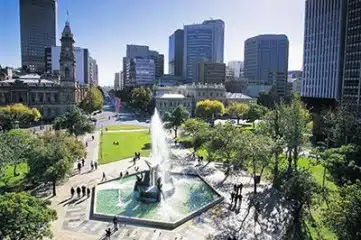
- Near campuses, there are usually plenty of parks and open spaces.
Australia also has a relaxed culture, including in education.
- Instructors are generally helpful and happy to answer questions.
- At the same time, they don’t do a lot of hand holding.
- It is up to you to motivate yourself and choose how to study and prepare for exams.
How much money to study there?
You need significant funds to study abroad in Australia. Exchange rates mean that, in terms of non-Australian currencies, most things in are quite expensive.
- The student visa requirement is that you need AUD $18,610 towards living costs for a year of study.
- While this amount is enough to live on, it is a minimum level.
- A typical student budget is $20,000 per year or more.
Tuition fees are set by education institutions and vary by course. For a basic university degree, the annual tuition fee for international students is roughly AUD $30,000.
If you work part time, you should be able to cover living costs. Australian student visas allow part-time work (up to 20 hours per week).
When do I need to apply?
It is a good idea to start applying for courses several months or more ahead of the start date. There are 40+ Australian universities to choose from.
The Australian academic year is divided into 2 semesters that each run for about 4 months. Semester 1 runs from March (or late February) to late June. Semester 2 is from early August to late November.
While each education institution sets its own dates, most universities follow the 2-semester system. Opportunities to study in the summer months (December to February) are available but limited.
Best city for international students
Australia has 5 large cities (each with more than a million people) and several smaller cities that attract large numbers of international students. All of them are popular places to live and study.
According to Student Cities Australia, Melbourne is the top Australian city for students and Wollongong is the top smaller city. The rankings account for livability factors and how attractive the cities are for international students.
Top Australian universities
Australian has 40+ universities, with an average 25,000 students attending classes on campus.
The top ranking universities are the University of Melbourne, University of Wollongong and University of Adelaide (Uni Reviews rankings).
How to get a student visa
You can apply for a student visa for Australia after enrolling in an approved course.
- Applying online can be done after receiving electronic confirmation of enrolment from the course provider.
- As part of the process, you need to send certified copies of documents to Australian immigration authorities.
As well as confirmation of enrollment, international students need to take out basic health insurance (Overseas Student Health Cover). They also need to attest that you have enough funds to cover living costs, with a base rate recently set at AUD $18,610 per year.
Accommodation for international students
International students often get accommodation through their education provider.
- Universities and other education institutions own property which they let out to students.
- They also have relationships with residential colleges and halls (e.g. at UniMelb), as well as private property companies.
University-provided accommodation can be more expensive, though it depends on the type of housing. It does, however, give you greater certainty that there is a place ready when you arrive. It can also be a good way of connecting to international students and students moving from other parts of Australia.
Most Australian students and many international students rent privately in share houses or flats. Different ways of doing this include:
- responding to an ad for a housemate
- forming a group to rent a property
- renting a property yourself and advertising for house mates.
For a moving to uni checklist, see the Good Universities guide.